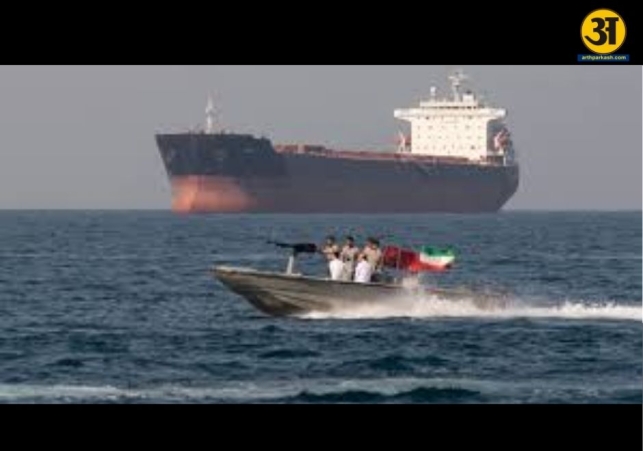
Iran’s Hormuz move may impact energy markets
Iran hints at new Hormuz policy and raises concerns over global oil trade
- By Gurmehar --
- Monday, 13 Apr, 2026
The Strait of Hormuz has once again become the center of global attention after Iran signaled that it may change how the important waterway is managed. Senior Iranian leader Mojtaba Khamenei said the management of the Strait of Hormuz would enter a “new phase.” His statement has raised questions about what Iran plans to do next and how it could affect oil prices, shipping routes, and world trade.
The Strait of Hormuz is one of the most important sea routes in the world. It connects the Persian Gulf with the Gulf of Oman and the Arabian Sea. A large share of the world’s crude oil and natural gas passes through this narrow route every day. Because of this, any tension in the area quickly affects energy markets around the world.
Iran’s latest remarks came after a temporary ceasefire between the United States and Iran. While the ceasefire reduced immediate military tensions, uncertainty around Hormuz remains high. Shipping companies, oil traders, and governments are closely watching developments.
Many analysts believe Iran may be considering new rules, transit charges, or stronger control over vessel movement through the strait. Even the possibility of such steps can create concern in global markets. Oil prices often rise when traders fear supply disruptions.
Why the Strait of Hormuz matters so much
The Strait of Hormuz is narrow but extremely valuable for world trade. It is around 161 kilometers long and only about 33 kilometers wide at its narrowest point. Despite its small size, it carries a major share of global oil exports.
Countries such as Saudi Arabia, Iraq, United Arab Emirates, Kuwait, and Qatar depend heavily on this route to export oil and gas to Asia, Europe, and other markets. If traffic slows or stops, energy supplies can be affected within days.
Before recent tensions, many oil tankers used to cross the strait regularly. However, after conflict in the region, some ships became cautious. Tanker operators worried about military risks, mines, inspections, or delays. Insurance costs for ships also rose sharply.
Even after the ceasefire announcement, some shipping companies remained careful. Empty tankers also need to return through the strait to refill, which means any disruption affects both outgoing and incoming movement. If vessels hesitate to enter the area, oil supply chains slow down.
That is why financial markets react quickly to news from Hormuz. If the route stays open and safe, prices often calm down. If threats increase, oil prices usually rise. Higher crude prices can lead to expensive petrol, diesel, airline fuel, and transport costs worldwide.
ALSO READ: Putin announces 32-hour ceasefire in Russia-Ukraine war for Orthodox Easter
ALSO READ: Pakistan assures full security for US delegation ahead of Iran talks in Islamabad
What Iran’s new phase could mean
Iran has in the past suggested charging ships for crossing the strait or increasing control over maritime movement. Reports recently claimed that transit fees on vessels were being discussed. Though no official final policy has been announced, such ideas have already created concern.
If Iran introduces charges, exporters and shipping firms may face higher costs. These costs could then be passed on to buyers, increasing global energy prices. Countries that import large amounts of oil, including India, may feel pressure through costlier fuel imports.
Some experts also point to international maritime law. Under global conventions, strategic waterways used for international navigation are expected to remain open for transit passage. Because of this, any unilateral restrictions or tolls could face diplomatic opposition.
The United States has also warned against any action that limits free movement through Hormuz. President Donald Trump criticised reports of possible fees and said oil movement through the route should continue smoothly. Washington sees open sea lanes as important for world trade and regional security.
For Gulf nations, a stable Hormuz route is essential. Their economies rely heavily on exporting oil and gas. Any delay can reduce revenue and disturb long-term supply contracts. This is why countries in the region usually support free navigation through the strait.
For consumers around the world, the issue is simple: if oil transport becomes difficult, prices may rise. That can affect fuel stations, airline tickets, food transport, and inflation. Even countries far from the Middle East can feel the impact.
At the same time, if diplomacy improves and tensions ease, markets may stabilise. Safe passage through Hormuz would help reduce fear and support smoother trade flows.
Iran’s statement about a “new phase” in Hormuz management has therefore become an important global issue. The world now waits to see whether it means stricter control, new charges, or simply stronger political messaging. Whatever the outcome, the Strait of Hormuz remains one of the most powerful pressure points in the global energy system.
Related News